


Hey there! As a supplier of high-speed doors, I often get asked about the heat-dissipation performance of these doors. So, I thought I'd take a moment to break it down for you all.
First off, let's understand what high-speed doors are. These are doors that can open and close at a much faster rate compared to traditional doors. They're commonly used in industrial settings, warehouses, cold storage facilities, and even some commercial spaces. The speed at which they operate helps in reducing energy loss, improving traffic flow, and enhancing overall efficiency.
Now, onto the heat-dissipation performance. Heat dissipation is crucial, especially in environments where temperature control is essential. For example, in a cold storage facility, you want to minimize the amount of heat that enters when the door opens and closes. Similarly, in a hot industrial environment, you might want to ensure that the heat generated inside doesn't seep out too quickly or that the door itself doesn't overheat.
One of the key factors that affect the heat-dissipation performance of high-speed doors is the material they're made of. Most high-speed doors are constructed using materials like PVC (polyvinyl chloride) or fabric. These materials have different thermal properties. PVC, for instance, has a relatively low thermal conductivity. This means that it doesn't transfer heat as easily as some other materials. So, when you have a high-speed door made of PVC, it acts as a bit of a barrier to heat transfer.
Fabric doors, on the other hand, can also offer good heat-dissipation characteristics. Many high-quality fabric materials used in these doors are designed to be insulating. They can trap air within their fibers, which acts as an additional layer of insulation against heat transfer. Some fabric doors even come with special coatings that further enhance their thermal performance.
Another important aspect is the design of the door. A well-designed high-speed door will have features that promote better heat dissipation. For example, some doors have a double-layered construction. This creates an air gap between the two layers, which acts as an insulator. The air trapped in this gap slows down the transfer of heat, whether it's from the outside in or the inside out.

Sealing is also a big deal when it comes to heat dissipation. A high-speed door with a tight seal around its edges will prevent heat from leaking through the gaps. This is why we pay so much attention to the quality of the seals on our high-speed doors. We use high-quality rubber or silicone seals that can withstand the wear and tear of frequent opening and closing, while still maintaining a good seal.
In addition to the material and design, the installation of the door plays a role in its heat-dissipation performance. If a door is not installed correctly, there could be gaps or misalignments that allow heat to escape. That's why we always make sure that our installation teams are highly trained and experienced. They know how to install the doors properly to ensure optimal heat-dissipation.
Now, let's talk about some real-world scenarios. In a cold storage facility, a high-speed door with good heat-dissipation performance can save a significant amount of energy. By reducing the amount of warm air that enters the cold storage area, the refrigeration system doesn't have to work as hard to maintain the low temperature. This not only saves on energy costs but also extends the lifespan of the refrigeration equipment.
In an industrial setting where there's a lot of heat generated by machinery, a high-speed door can help contain the heat within a specific area. This can improve the working conditions for employees and also prevent the heat from affecting other parts of the facility.
If you're in the market for a high-speed door and you're concerned about heat-dissipation performance, you might want to consider a door from a reliable supplier like us. We've been in the business for years, and we know how to design and manufacture high-speed doors that offer excellent heat-dissipation.
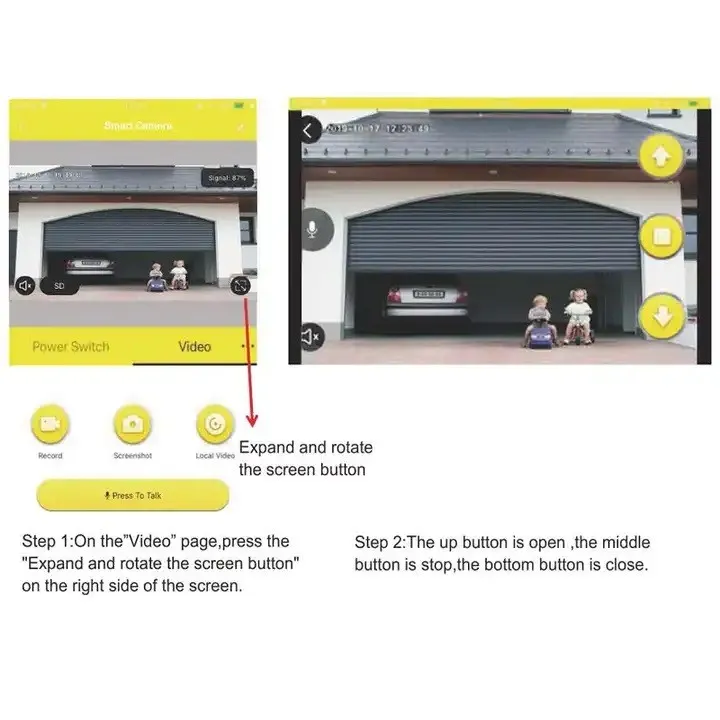
And if you're looking for additional features like a WiFi Camera Opener, you can check out our WiFi Camera Opener Supplier. This can add an extra layer of convenience and security to your high-speed door.
When it comes to choosing the right high-speed door for your needs, it's important to consider your specific requirements. Think about the temperature conditions in your facility, the frequency of door usage, and the level of heat-dissipation you need. Our team of experts is always here to help you make the right decision. We can provide you with detailed information about the heat-dissipation performance of our different door models and help you select the one that's best suited for your application.
So, if you're interested in learning more about our high-speed doors and their heat-dissipation performance, or if you're ready to make a purchase, don't hesitate to get in touch with us. We're here to answer all your questions and guide you through the procurement process. Whether you're a small business owner or managing a large industrial facility, we have the right high-speed door solution for you.
In conclusion, the heat-dissipation performance of high-speed doors is a complex but important factor to consider. By choosing the right material, design, and installation, you can ensure that your high-speed door helps you save energy, improve efficiency, and maintain a comfortable environment in your facility. So, take the time to do your research, and if you need any assistance, we're just a call or an email away.
References:
- Industry reports on high-speed door technology
- Research studies on thermal properties of door materials