


Hey there! I'm a supplier of high speed doors, and today I wanna chat about just how fast these bad boys can open and close. It's a question I get a lot, and it's super important when you're looking to invest in a high speed door for your business.
Let's start by understanding what we mean by "high speed." High speed doors are designed to open and close at a much faster rate than your average door. This speed is crucial for a bunch of reasons, like improving traffic flow, saving energy, and enhancing security.
So, how fast can they actually go? Well, it depends on a few factors. First off, the type of high speed door matters. There are different kinds out there, like rolling doors, sliding doors, and folding doors, and each has its own typical speed range.
Rolling high speed doors are pretty popular. They can open at speeds ranging from 0.6 to 2.5 meters per second. That might not sound like a lot, but when you think about it in terms of a busy warehouse or industrial facility, it makes a huge difference. For example, if you have a forklift constantly moving in and out of a loading dock, a fast - opening rolling door means less waiting time and more efficient operations.
Sliding high speed doors, on the other hand, usually open at speeds between 0.5 and 1.5 meters per second. These doors are great for areas where space is limited, like in some manufacturing plants. The speed still allows for quick access while taking up less lateral space compared to other door types.
Folding high speed doors can open at speeds similar to sliding doors, around 0.5 to 1.5 meters per second. They're often used in places where you need a large opening but don't have a lot of overhead space for a rolling door.
Now, the speed isn't just about how quickly the door can get out of the way. It's also about how fast it can close. Closing speed is just as important, especially when it comes to security and energy efficiency. A fast - closing door can prevent unauthorized access and keep the temperature inside a building stable. Most high speed doors can close at speeds comparable to their opening speeds, but in some cases, manufacturers can adjust the closing speed to meet specific needs.
Another factor that affects the speed of high speed doors is the size of the door. Generally, smaller doors can open and close faster than larger ones. This is because there's less mass to move. A small high speed door in a retail store might open and close in just a few seconds, while a huge door at an aircraft hangar will take a bit longer, even though it's still considered high speed compared to a regular door.
The technology used in the door also plays a big role. Modern high speed doors are equipped with advanced motors and control systems. These systems can optimize the speed based on different conditions. For example, some doors can sense the presence of an object in the doorway and adjust their speed or stop altogether to prevent collisions.
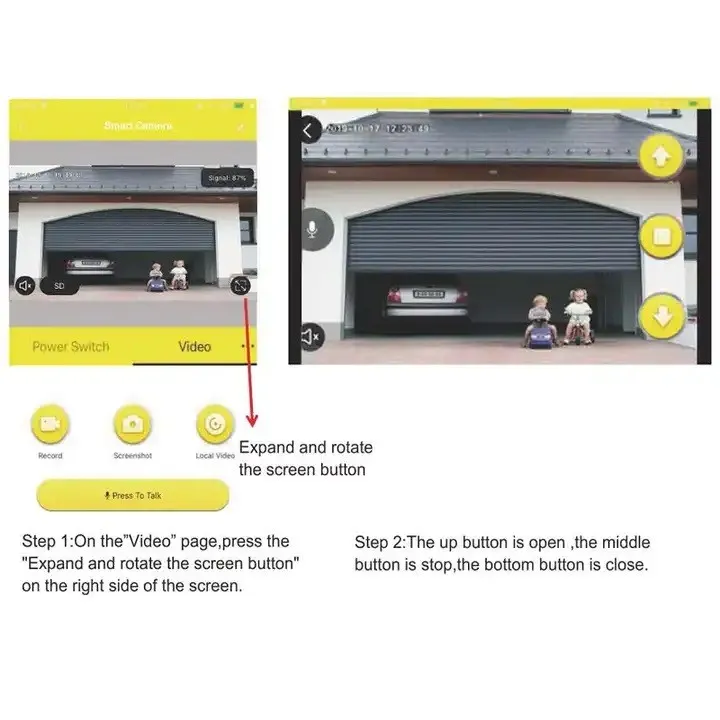
If you're looking for an added layer of convenience and control, you might want to consider a high speed door with a WiFi camera opener. This technology allows you to open and close the door remotely using your smartphone or other devices. It's a great option for businesses where you need to let someone in quickly without being physically present at the door. You can find more about WiFi Camera Opener Supplier to explore this option further.
Maintenance also impacts the speed of high speed doors. Regular maintenance ensures that all the components are working properly. If the tracks are dirty or the motor is not lubricated, it can slow down the door's operation. As a supplier, I always recommend following the manufacturer's maintenance schedule to keep your high speed door running at its best.
In addition to the factors I've mentioned, the environment where the door is installed can also have an effect. For instance, if a door is installed in a place with a lot of dust or debris, it might not operate as smoothly or as fast as it should. Extreme temperatures can also impact the performance of the door's components.

So, why does all this speed matter for your business? Well, as I said earlier, it improves efficiency. Faster door operation means less downtime for your workers and equipment. It also saves energy. When a door opens and closes quickly, there's less time for hot or cold air to escape, which can lead to significant savings on your energy bills. And from a security perspective, a fast - closing door can act as a better barrier against intruders.
If you're in the market for a high speed door, I'd love to help you find the right one for your needs. We offer a wide range of high speed doors with different speeds, sizes, and features. Whether you're running a small business or a large industrial facility, we can find a solution that fits your requirements. Just reach out to us, and we can have a chat about your specific situation and figure out the best high speed door for you.
In conclusion, high speed doors can open and close at varying speeds depending on the type, size, technology, maintenance, and environment. The speed is a crucial factor that can bring many benefits to your business, from increased efficiency to energy savings and better security. Don't hesitate to contact us if you have any questions or if you're ready to start the process of purchasing a high speed door.
References
- Industry standards and guidelines for high speed doors
- Manufacturer's specifications for different high speed door models
- Research on the impact of high speed doors on business operations and energy consumption