


Do hospital swing doors have an adjustable closing speed? This is a question that many healthcare facilities and professionals often ask. As a supplier of hospital swing doors, I am well - versed in the features and functions of these essential components in a hospital environment. In this blog, I will explore the topic in detail, discussing the importance of adjustable closing speed, the mechanisms that enable it, and the benefits it brings to hospitals.
The Importance of Adjustable Closing Speed in Hospital Swing Doors
In a hospital setting, the functionality of swing doors is critical. Hospital swing doors are used in various areas, including patient rooms, operating theaters, emergency departments, and corridors. Each area has different requirements, and the ability to adjust the closing speed of the doors can significantly enhance the safety, efficiency, and comfort of the hospital environment.

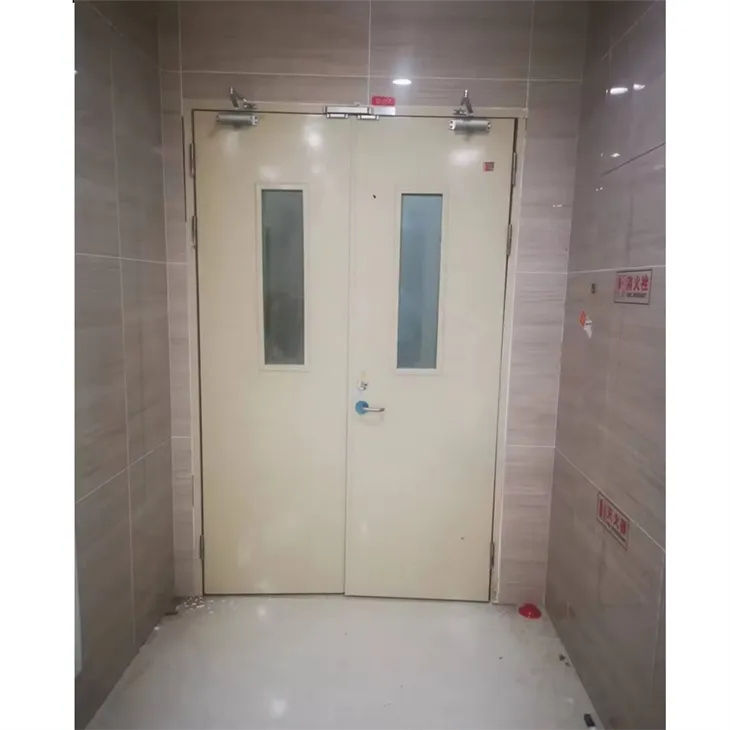
Safety
Safety is the top priority in hospitals. Patients may be using wheelchairs, stretchers, or other medical equipment, and a door that closes too quickly can pose a serious hazard. It could potentially cause collisions, injuries to patients or staff, or damage to medical devices. On the other hand, a door that closes too slowly may not provide an adequate barrier against the spread of germs, noise, or unwanted air currents. By having an adjustable closing speed, hospital staff can set the door to close at a safe and appropriate pace for the specific area. For example, in areas where there is a high volume of traffic with patients on stretchers, a slower closing speed can be selected to ensure safe passage.
Infection Control
Hospitals are constantly fighting against the spread of infections. A properly adjusted door closing speed can help maintain a better seal when the door is closed, reducing the chances of cross - contamination between different areas of the hospital. A door that closes quickly and firmly can prevent the passage of airborne pathogens, dust, and other contaminants. By adjusting the closing speed according to the infection risk level of each area, hospitals can improve their overall infection control measures.
Energy Efficiency
Energy costs are a significant concern for hospitals. Swing doors that close at an optimal speed can help regulate the flow of air in and out of different areas, reducing the load on heating and cooling systems. A door that closes too slowly allows more air to escape or enter, leading to increased energy consumption. By adjusting the closing speed, hospitals can save on energy costs while maintaining a comfortable indoor environment.
Mechanisms for Adjusting Closing Speed
Modern hospital swing doors are equipped with various mechanisms that allow for the adjustment of closing speed. These mechanisms can be broadly classified into hydraulic and pneumatic systems.
Hydraulic Systems
Hydraulic systems are commonly used in hospital swing doors. They work by using a hydraulic fluid to control the movement of the door. The fluid is contained within a cylinder, and as the door opens and closes, the fluid is forced through a series of valves and passages. By adjusting the size of these passages, the flow rate of the fluid can be controlled, which in turn affects the closing speed of the door. Hydraulic systems are known for their smooth and reliable operation, and they can provide precise control over the closing speed.
Pneumatic Systems
Pneumatic systems use compressed air to control the movement of the door. Similar to hydraulic systems, pneumatic systems have valves that can be adjusted to regulate the flow of air. When the door is opened, air is compressed, and as it closes, the air is released at a controlled rate. Pneumatic systems are often used in applications where a lighter touch is required, and they can also be adjusted to achieve different closing speeds.
Benefits of Adjustable Closing Speed for Hospitals
Customization for Different Areas
As mentioned earlier, different areas of a hospital have different requirements. For example, in an operating theater, a fast - closing door may be necessary to maintain a sterile environment, while in a patient waiting area, a slower closing speed may be more appropriate to ensure the safety and comfort of patients. With adjustable closing speed, hospitals can customize the door operation for each specific area, meeting the unique needs of their facility.
Adaptability to Changing Conditions
Hospitals are dynamic environments, and the traffic flow and usage patterns can change throughout the day. For instance, during peak hours in the emergency department, there may be a higher volume of patients and staff moving through the doors. By adjusting the closing speed, hospitals can adapt to these changing conditions, ensuring smooth and efficient operations.
Compliance with Regulations
There are various regulations and standards that hospitals must comply with regarding door safety and functionality. Adjustable closing speed allows hospitals to meet these requirements. For example, some regulations may specify a maximum closing speed to prevent injuries, and hospitals can easily adjust their doors to meet these standards.
Our Offerings as a Hospital Swing Door Supplier
As a supplier of hospital swing doors, we understand the importance of adjustable closing speed. Our Automatic Hospital Swing Door products are designed with state - of - the - art technology to provide precise control over the closing speed.
Our doors are equipped with high - quality hydraulic or pneumatic systems that are easy to adjust. We offer a range of options for different hospital applications, whether it's a small patient room or a large operating theater. Our technical support team can assist hospitals in setting up the doors and adjusting the closing speed to meet their specific needs.
In addition to adjustable closing speed, our hospital swing doors also feature other important functions such as automatic opening, emergency release, and anti - panic devices. These features enhance the safety and usability of the doors, making them an ideal choice for hospitals.
Contact Us for Procurement and Consultation
If you are a hospital administrator, facilities manager, or anyone involved in the procurement of hospital equipment, we invite you to contact us for more information about our hospital swing doors. Our team of experts can provide you with detailed product specifications, pricing, and installation services.
We understand that every hospital has unique requirements, and we are committed to providing customized solutions to meet your needs. Whether you are looking to upgrade your existing doors or install new ones, we can help you make the right choice.
Don't hesitate to reach out to us to discuss your hospital swing door needs. We look forward to working with you to create a safer, more efficient, and more comfortable hospital environment.
References
- Hospital Facility Design and Construction Standards. American Hospital Association.
- Infection Control Guidelines for Healthcare Facilities. Centers for Disease Control and Prevention.
- Energy Efficiency in Healthcare Buildings. World Health Organization.